Cypress Cove
Where the Crawdads SingCypress Cove is a remote peninsula in the marsh where Kya searches for rare mushrooms and, in August 1969, unexpectedly comes face-to-face with Chase Andrews. The place brings together the habits that sustain her solitary life—boating, observing, and drawing—with a confrontation that later acquires a public dimension in court. Its secluded setting is not merely a backdrop: the cove’s sheltering trees and hidden shore shape both the intimacy and the uncertainty of what happens there.
Setting and natural history
The locals call the remote peninsula Cypress Cove. Kya has visited before and once saw rare toadstools there; when she returns on a foggy August morning, she knows the season is late for mushrooms but hopes the cove’s cool, moist conditions may bring them back. Her destination reflects the close attention to habitat that defines her life in the marsh: she searches for a particular species in a place whose conditions might support it, rather than treating the landscape as interchangeable scenery.
Moss-draped trees line the bank, their low limbs forming a cave-like passage near the shore. Kya glides through it in her boat, looking among the thickets for small orange mushrooms on slender stalks. She eventually spots them clinging to an old stump. After beaching her boat, she sits cross-legged and draws the mushrooms. The scene gives Cypress Cove a precise, observed character: a sheltered shoreline, a narrow passage under branches, and a distinctive growth on an old stump. Kya’s purpose there is attentive study, carried out with her drawing materials rather than a search for company.
Kya’s return and encounter with Chase
The August visit follows a long interval in Kya’s relationship with Tate. More than a month has passed since he left a compass for her on the feather stump. She has seen him in the marsh but has not gone near enough to thank him, and the compass remains safely tucked into a pocket of her knapsack, unused. That detail places the trip within a period of emotional distance: even as Kya continues moving through familiar marsh spaces, she has not yet acted on Tate’s gift or reopened contact with him.
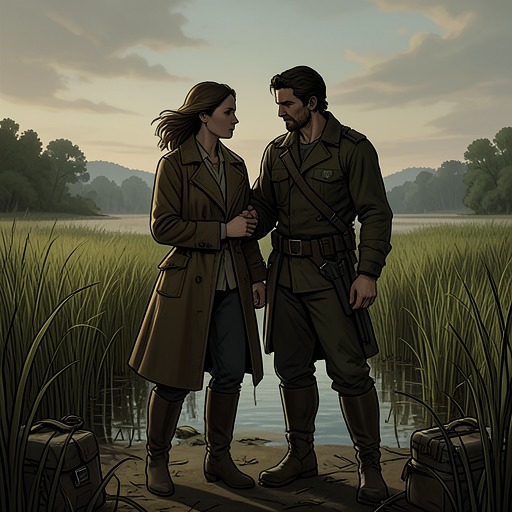
Cypress Cove interrupts her solitary routine when Chase appears on foot. Kya hears footsteps on the forest floor before she turns and finds him facing her. She has not heard a boat arrive, and wonders how he reached the peninsula. Chase explains that he was fishing, saw her pass, and landed on the other side. His route accounts for his sudden presence, but does not make it welcome: Kya stuffs her pencils and pad into her knapsack and asks him to leave. The shift is immediate—from quiet observation and drawing to an encounter she wants to end. The cove’s remoteness allows the meeting to feel private, while Kya’s uncertainty about how Chase arrived underscores how little control she has over who enters that privacy.
The wooded point and courtroom testimony
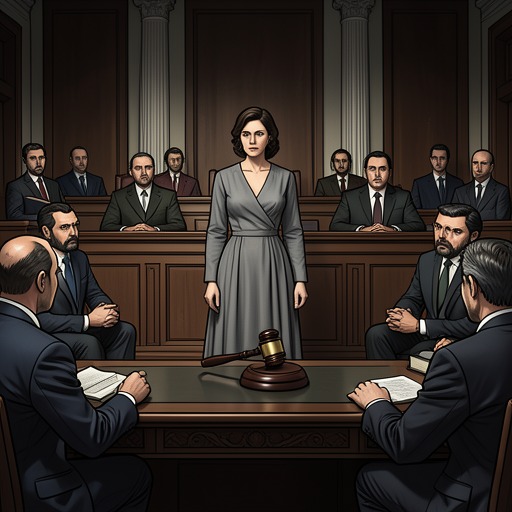
A later courtroom account recalls a disturbance in the trees on a point. A fisherman and his companion say they had been there since dawn; near eleven, as they were preparing to pull in their lines, they heard voices that grew louder. They could not see the people, but described a man and a woman arguing. The testimony then identifies Kya as the woman and recounts her kicking the man, including repeated kicks to his back. The account turns a wooded shore from a place of private encounter into evidence discussed before a crowded court.
The testimony matters to Cypress Cove because it gives the landscape a second narrative register: what Kya experiences within the trees is later reconstructed by people who say they heard the disturbance from nearby. Their account is limited by what they claim to have perceived—they heard voices but initially could not see the pair—yet it becomes part of the public case against her. The judge corrects the witness when he uses the label Marsh Girl, requiring him to call her Miss Clark. In that exchange, the courtroom’s naming of Kya contrasts with the isolated place where the reported confrontation occurred.
Narrative significance
Cypress Cove gathers several strands of Kya’s life without resolving them into a single meaning. It is a destination chosen for natural history, where she can search, observe, and make a drawing; it is also where Chase’s unexpected arrival turns solitude into conflict. The compass in her knapsack quietly connects the trip to her unresolved distance from Tate, while the encounter with Chase brings another relationship into the foreground. These details keep the cove tied to Kya’s ordinary practices even as the scene changes direction.
The later testimony adds a consequential contrast between an obscured event and its formal retelling. In the woods, the witnesses say they could hear voices but could not see the people; in court, the account is presented as evidence and Kya is identified. The setting therefore marks a boundary between private experience and public judgment. Cypress Cove is at once a habitat Kya studies closely and a secluded place whose events are later interpreted by others, making its quiet natural detail inseparable from the uncertainty surrounding what occurred there.